Alumni Spotlight – Rodlyn-mae Banting, Class of 2022
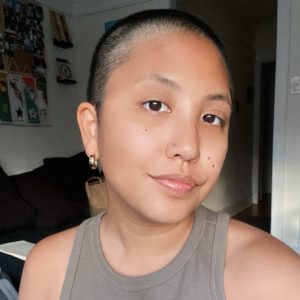
Rodlyn-mae Banting (they/them) is a Filipino American poet, journalist, and cultural critic writing at the intersections of the arts, race, gender, and empire. They graduated with an MA in Gender & Women’s Studies from UW–Madison in 2022. They also earned a BA in English & Writing with a minor in Gender & Sexuality Studies from Loyola University Maryland in Baltimore in 2019. Since graduating with their MA, Rodlyn has worked as a writer in a few different spaces, including as a staff writer for the feminist website Jezebel, a Communications Associate for a Brooklyn nonprofit, a community reporter for Madison365, and an arts writer for Tone Madison. For the past year and a half, they were also the Communications & Events Associate for the Wisconsin Book Festival. Outside of work, they were involved in community organizing with the Chicago Filipino community. This fall, Rodlyn started a PhD program in Indigenous, Race, and Ethnic Studies at the University of Oregon in Eugene, Oregon. Their research is focused on imperial legacies of intimacy and desire in the Philippines with a focus on the contemporary presence of white women and white femininity in the archipelago today.
How does Gender and Women’s Studies/LGBTQ+ studies matter in the day-to-day of your professional life?
Having just started a PhD in Ethnic Studies, I am so grateful for the lens and critical thinking that my Gender & Women’s studies degree gave me. The field of Ethnic Studies asks us to constantly critique power, what/who it protects and disenfranchises, and this kind of thinking was really honed during my time in the MA program. The teaching experience I was given at UW was also one of the high points of the program for me, and I’m so grateful for the lead instructors who took the time to bolster my pedagogical understanding and helped develop my skills as an educator. I am a grader this term, but I can’t wait to get back in the classroom as a discussion leader in the winter for Intro to Ethnic Studies!
Do you have advice for students who may share your interests and may want to pursue a similar graduate degree and/or career?
In our capitalist society, it’s common for young people to be bogged down by questions of the hireability of certain majors and job prospects post-grad. And while I don’t deny the importance of financial stability and being able to support yourself materially, I would think of the Gender & Women’s Studies major/minor as a lens through which to see the world rather than a concrete academic path that will grant you one specific role upon its completion. I have worked in journalism, philanthropy, higher education, and more, and I find that having my feminist and racial justice lenses has been an invaluable thing that I bring to any of these industries.
What do you remember fondly from the Department of Gender & Women’s Studies? Favorite class? Instructor?
I started my MA in the fall of 2020, squarely in the pandemic. There was a lot of fear and anxiety about what higher education would look like, along with the general state of the world. I really appreciated that my graduate seminars were a space in which we could discuss these fears and anxieties (both from personal and critical feminist perspectives), and in turn, I tried to cultivate these spaces for my undergraduate students. I would later learn from them that this wasn’t common across campus, and that they really valued being able to voice their concerns in my classroom. One of my favorite classes during graduate school was my graduate seminar on Care Theory with Dr. James McMaster. In addition to learning about the foundational works of care theory, James was also careful to include lenses of race and labor in our readings and discussions. Some of my most crucial arguments around transnational Filipino labor patterns that undergirded my thesis came from readings and ideas introduced to me in this seminar.
What, if anything, do you wish could tell your undergraduate self?
I was (and still am) very high achieving in academic spaces, but there are many ways in which excelling in class is just one part of the undergraduate experience. I wish I had been less obsessed with getting things “right” and simply enjoyed the process of learning. I would also tell myself that building relationships with faculty members is more important than you think—these connections can be beneficial to you professionally, but will also ebb and flow over the course of your life if you make the effort of keeping in touch with mentors you really valued during your time in undergrad. And of course, I’d remind myself of the importance of community and pouring time and effort into getting to know and be there for my peers. This will resonate in every space, academic or not. Some of my classmates from my MA program are my lifelong friends today.