Marlena Holden – Alumni Spotlight, Class of 2000
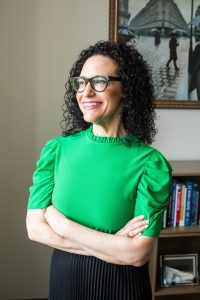
Marlena G. Holden (she/her) graduated with a double major in English and Gender and Women’s Studies in 2000 and was a Powers-Knapp and Chancellor’s Scholar. She received her Master’s degree in Women’s Studies from The Ohio State University (’02), where she focused on feminist film theory. She is the Director of Brand & Communications at Education Analytics in Madison, WI.
Marlena spent her career in marketing and communications—working for a local advertising agency, advocacy groups, non-profits, UW–Madison, and now for a research-focused non-profit technology and software company. In her free time, Marlena is a voracious reader and is fortunate to volunteer for the Madison Public Library Foundation Marketing Committee. She encourages you to get a library card today if you don’t already have one! Your local library has more than books—it might also have a tool lending library, no-cost programming, classes, and access to audiobooks.
How does Gender and Women’s Studies/LGBTQ+ studies matter in the day-to-day of your professional life?
Gender and 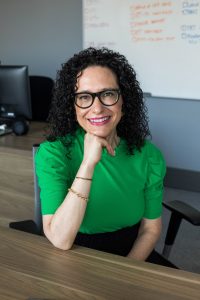 Women’s Studies provided me with a lens to critically analyze systems and culturally dominant ways of thinking that are essential in all aspects of the professional world. Whether I’m working on messaging strategies or guiding organizational initiatives, I strive to ensure that communication is inclusive, equitable, and accessible. These principles guide my work to engage in meaningful conversations and work.
Do you have advice for students who may share your interests and may want to pursue a similar graduate degree and/or career?
Write as much as possible, and in as many different styles as you can. As an English and Gender & Women’s Studies major, I wrote countless academic papers, yet I often received feedback that my writing was “too corporate.” At the time, I worried it was a flaw, but little did I know that this skill would become an asset in my professional life.
I attended The Ohio State University with the goal of pursuing a career in academia; however, I quickly realized that path wasn’t the right fit for me. It felt heartbreaking at the time—like the end of a dream—and it also led to a career that has been personally fulfilling in ways I couldn’t have imagined. This experience taught me that adaptability and openness to change are just as important as planning your future.
Writing remains central to everything I do. It’s a skill you will use in any career, whether you’re crafting an email, preparing a presentation, or developing a strategic report. To this day, when I think about areas for improvement, I always focus on writing. I continue to refine my skills, learning the science and art behind effective communication.
I can’t recommend UW’s Writing Center enough—it was a instrumental during my undergraduate years in helping me learn and fine tune my skills. Scheduling regular appointments helped me stay on track with deadlines and significantly improved my work.Stay curious. There is no single path to success, and exploring interests outside of your academic focus can keep you connected to a world of possibilities. For me, that curiosity has meant reading widely, attending workshops, mentoring others, and volunteering. Those experiences not only broaden your perspective but also help you discover passions and opportunities you might not have considered otherwise.
What do you remember fondly from the Department of Gender & Women’s Studies? Favorite class? Instructor?
Women’s Studies provided me with a lens to critically analyze systems and culturally dominant ways of thinking that are essential in all aspects of the professional world. Whether I’m working on messaging strategies or guiding organizational initiatives, I strive to ensure that communication is inclusive, equitable, and accessible. These principles guide my work to engage in meaningful conversations and work.
Do you have advice for students who may share your interests and may want to pursue a similar graduate degree and/or career?
Write as much as possible, and in as many different styles as you can. As an English and Gender & Women’s Studies major, I wrote countless academic papers, yet I often received feedback that my writing was “too corporate.” At the time, I worried it was a flaw, but little did I know that this skill would become an asset in my professional life.
I attended The Ohio State University with the goal of pursuing a career in academia; however, I quickly realized that path wasn’t the right fit for me. It felt heartbreaking at the time—like the end of a dream—and it also led to a career that has been personally fulfilling in ways I couldn’t have imagined. This experience taught me that adaptability and openness to change are just as important as planning your future.
Writing remains central to everything I do. It’s a skill you will use in any career, whether you’re crafting an email, preparing a presentation, or developing a strategic report. To this day, when I think about areas for improvement, I always focus on writing. I continue to refine my skills, learning the science and art behind effective communication.
I can’t recommend UW’s Writing Center enough—it was a instrumental during my undergraduate years in helping me learn and fine tune my skills. Scheduling regular appointments helped me stay on track with deadlines and significantly improved my work.Stay curious. There is no single path to success, and exploring interests outside of your academic focus can keep you connected to a world of possibilities. For me, that curiosity has meant reading widely, attending workshops, mentoring others, and volunteering. Those experiences not only broaden your perspective but also help you discover passions and opportunities you might not have considered otherwise.
What do you remember fondly from the Department of Gender & Women’s Studies? Favorite class? Instructor?
 I remember the connection I felt with other students. As a small cohort, we shared classes and experiences that created a community, often with overlapping classes with my studies in English. Women’s Studies 103 opened a new world for me in understanding how our bodies connect to broader social and cultural structures. It was a transformative experience. I deeply admired Professor Susan Stanford Friedman, whose classes in both English and Gender and Women’s Studies were engaging and thought-provoking. I also hold tremendous respect and affection for my advisor, Mimi Orner, who played a foundational role in my growth as a student and a young adult. She was a fierce advocate for me, offering guidance and support in many ways. Her passing just a few months after I graduated was a profound loss, and I think of her words and actions often.Beyond academics, I formed incredible friendships during my time in the department—friendships that have lasted more than two decades. These are people I consider dear friends and we have meaningful roles in one another’s lives.
What, if anything, do you wish you could tell your undergraduate self?
Go to office hours early and often! I didn’t discover the value of office hours until my junior year, and it made all the difference in my educational experience. Meeting with instructors and professors helped me clarify what they meant in lectures, understand their expectations, and build deeper connections to the material. I remember feeling nervous the first few times I went, and once I added it to my weekly routine, it transformed my experience. My coursework became more engaging, and my grades improved. If you’re unsure how to start, bring one question from a lecture or reading—something you found interesting or didn’t fully understand.
Another piece of advice: take advantage of the countless no-cost events on campus. Whether it’s a guest lecture, a cultural performance, or a workshop, if something sparks your interest, go! You never know how it might expand your perspective or connect you to new people and ideas.
I remember the connection I felt with other students. As a small cohort, we shared classes and experiences that created a community, often with overlapping classes with my studies in English. Women’s Studies 103 opened a new world for me in understanding how our bodies connect to broader social and cultural structures. It was a transformative experience. I deeply admired Professor Susan Stanford Friedman, whose classes in both English and Gender and Women’s Studies were engaging and thought-provoking. I also hold tremendous respect and affection for my advisor, Mimi Orner, who played a foundational role in my growth as a student and a young adult. She was a fierce advocate for me, offering guidance and support in many ways. Her passing just a few months after I graduated was a profound loss, and I think of her words and actions often.Beyond academics, I formed incredible friendships during my time in the department—friendships that have lasted more than two decades. These are people I consider dear friends and we have meaningful roles in one another’s lives.
What, if anything, do you wish you could tell your undergraduate self?
Go to office hours early and often! I didn’t discover the value of office hours until my junior year, and it made all the difference in my educational experience. Meeting with instructors and professors helped me clarify what they meant in lectures, understand their expectations, and build deeper connections to the material. I remember feeling nervous the first few times I went, and once I added it to my weekly routine, it transformed my experience. My coursework became more engaging, and my grades improved. If you’re unsure how to start, bring one question from a lecture or reading—something you found interesting or didn’t fully understand.
Another piece of advice: take advantage of the countless no-cost events on campus. Whether it’s a guest lecture, a cultural performance, or a workshop, if something sparks your interest, go! You never know how it might expand your perspective or connect you to new people and ideas.
Women’s Studies provided me with a lens to critically analyze systems and culturally dominant ways of thinking that are essential in all aspects of the professional world. Whether I’m working on messaging strategies or guiding organizational initiatives, I strive to ensure that communication is inclusive, equitable, and accessible. These principles guide my work to engage in meaningful conversations and work.
Do you have advice for students who may share your interests and may want to pursue a similar graduate degree and/or career?
Write as much as possible, and in as many different styles as you can. As an English and Gender & Women’s Studies major, I wrote countless academic papers, yet I often received feedback that my writing was “too corporate.” At the time, I worried it was a flaw, but little did I know that this skill would become an asset in my professional life.
I attended The Ohio State University with the goal of pursuing a career in academia; however, I quickly realized that path wasn’t the right fit for me. It felt heartbreaking at the time—like the end of a dream—and it also led to a career that has been personally fulfilling in ways I couldn’t have imagined. This experience taught me that adaptability and openness to change are just as important as planning your future.
Writing remains central to everything I do. It’s a skill you will use in any career, whether you’re crafting an email, preparing a presentation, or developing a strategic report. To this day, when I think about areas for improvement, I always focus on writing. I continue to refine my skills, learning the science and art behind effective communication.
I can’t recommend UW’s Writing Center enough—it was a instrumental during my undergraduate years in helping me learn and fine tune my skills. Scheduling regular appointments helped me stay on track with deadlines and significantly improved my work.Stay curious. There is no single path to success, and exploring interests outside of your academic focus can keep you connected to a world of possibilities. For me, that curiosity has meant reading widely, attending workshops, mentoring others, and volunteering. Those experiences not only broaden your perspective but also help you discover passions and opportunities you might not have considered otherwise.
What do you remember fondly from the Department of Gender & Women’s Studies? Favorite class? Instructor?
I remember the connection I felt with other students. As a small cohort, we shared classes and experiences that created a community, often with overlapping classes with my studies in English. Women’s Studies 103 opened a new world for me in understanding how our bodies connect to broader social and cultural structures. It was a transformative experience. I deeply admired Professor Susan Stanford Friedman, whose classes in both English and Gender and Women’s Studies were engaging and thought-provoking. I also hold tremendous respect and affection for my advisor, Mimi Orner, who played a foundational role in my growth as a student and a young adult. She was a fierce advocate for me, offering guidance and support in many ways. Her passing just a few months after I graduated was a profound loss, and I think of her words and actions often.Beyond academics, I formed incredible friendships during my time in the department—friendships that have lasted more than two decades. These are people I consider dear friends and we have meaningful roles in one another’s lives.
What, if anything, do you wish you could tell your undergraduate self?
Go to office hours early and often! I didn’t discover the value of office hours until my junior year, and it made all the difference in my educational experience. Meeting with instructors and professors helped me clarify what they meant in lectures, understand their expectations, and build deeper connections to the material. I remember feeling nervous the first few times I went, and once I added it to my weekly routine, it transformed my experience. My coursework became more engaging, and my grades improved. If you’re unsure how to start, bring one question from a lecture or reading—something you found interesting or didn’t fully understand.
Another piece of advice: take advantage of the countless no-cost events on campus. Whether it’s a guest lecture, a cultural performance, or a workshop, if something sparks your interest, go! You never know how it might expand your perspective or connect you to new people and ideas.