
Judith Houck
Wittig Professor and Vilas Distinguished Achievement Professor of Gender & Women's Studies and History
5209 Levy Hall
Biography
Joint appointment: History
Affiliate: Medical History and Bioethics
Judith Houck has recently published Looking through the Speculum: Examining the Women’s Health Movement (Chicago: 2024). This historical exploration highlights local history to tell a national story about the evolution of the women’s health movement, illuminating the struggles and successes of bringing feminist dreams into clinical spaces.
The women’s health movement in the United States, beginning in 1969 and taking hold in the 1970s, was a broad-based movement seeking to increase women’s bodily knowledge, reproductive control, and well-being. It was a political movement that insisted that bodily autonomy provided the key to women’s liberation. It was also an institution-building movement that sought to transform women’s relationships with medicine; it was dedicated to increasing women’s access to affordable health care without the barriers of homophobia, racism, and sexism. But the movement did not only focus on women’s bodies. It also encouraged activists to reimagine their relationships with one another, to develop their relationships in the name of personal and political change, and, eventually, to discover and confront the limitations of the bonds of womanhood.
This book examines historically the emergence, development, travails, and triumphs of the women’s health movement in the United States. By bringing medical history and the history of women’s bodies into our emerging understandings of second-wave feminism, Looking through the Speculum sheds light on the understudied efforts to shape health care and reproductive control beyond the hospital and the doctor’s office—in the home, the women’s center, the church basement, the bookshop, and the clinic. Lesbians, straight women, and women of color all play crucial roles in this history. At its center are the politics, institutions, and relationships created by and within the women’s health movement, depicted primarily from the perspective of the activists who shaped its priorities, fought its battles, and grappled with its shortcomings.
Presently Houck is working on a history of lesbians in the anti-AIDS movement in the United States. In the 1980s, as AIDS ravaged the gay male community across the country, lesbians rushed to be of use. They delivered food to AIDS patients, used their bodies to protest FDA rules, led AIDS social service organizations, and demanded more HIV/AIDS research. They were caregivers, educators, theorists, agitators, health providers, researchers, and case managers. Because they were understood to be part of a “gay community,” lesbians’ participation in AIDS activism and social service has often been understood as unremarkable. Nevertheless, in part because they were considered “low risk” for HIV infection, the participation of lesbians in AIDS work was always complicated and often contentious. To explore the rich issues at play, I am writing the first book-length history of HIV/AIDS organizing that centers the experience of lesbians.
The place of lesbians in anti-AIDS projects raises a series of questions ripe for historical analysis. Why were lesbians over-represented in AIDS work? How did lesbian activists understand their role in AIDS organizing? How was their participation received and represented? How did lesbian feminists influence the shape of AIDS activism? How did lesbians understand their own risk of HIV infection? How were HIV-positive lesbians treated by the lesbian community? By looking at HIV-positive lesbians, lesbian activists, and lesbian health institutions, this book promises to illuminate themes central to the history of the HIV/AIDS epidemic and to expand our historical understanding of gender, sexuality, feminism, racism, and identity politics.
TEACHING
2025-2026: on leave.
I am not taking graduate students.
Courses regularly taught:
HisSci 404: A History of Disease
GWS/HisSci 532: A History of the American Body
GWS/HisSci 531: Women and Health in American History
GWS 640: Capstone Seminar in Gender and Women’s Studies
Graduate Seminars:
HisSci 919: A History of Health Activism
His Sci 919: Gender, Health, and Illness
HisSci 919: A History of Reproduction
GWS 880: An Introduction to Graduate Study in Gender and Women’s Studies
Selected Publications:
“Lesbian Health Matters: The History of An Evolving Concept,” for International Encyclopedia of Social and Behavioral Sciences, 2015.
“The Best Prescription for Women’s Health: Feminist Approaches to Well-Woman Care,” in Prescribed: Writing, Filling, Using, and Abusing the Prescription in Modern America, eds. Jeremy A. Greene and Elizabeth Siegel Watkins (Johns Hopkins University Press, 2012).
Hot and Bothered: Women, Medicine, and Menopause in Modern America (Cambridge: Harvard University Press, 2006).
“‘What Do These Women Want?’ Feminist Responses to Feminine Forever, 1963-1980,” Bulletin of the History of Medicine 77 (2003): 103-132.
“How to Treat a Menopausal Woman: A History, 1900-2000,”Current Woman’s Health Reports 2 (2000): 349-355.
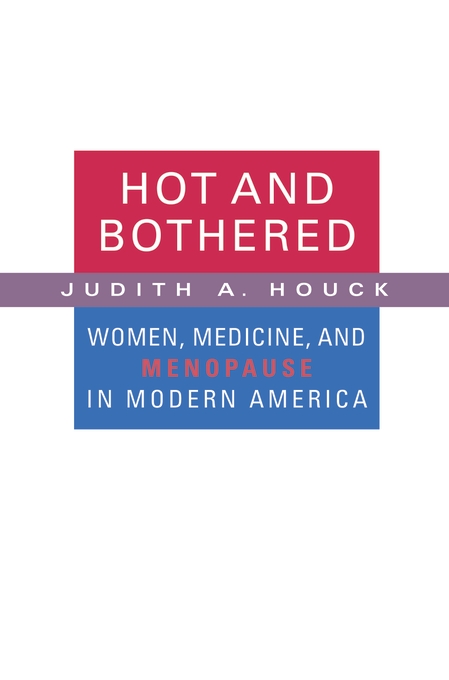
Hot and Bothered: Women, Medicine, and Menopause in Modern America
Houck, J. Hot and Bothered: Women, Medicine, and Menopause in Modern America. Harvard University Press, 2006.
How did menopause change from being a natural (and often welcome) end to a woman’s childbearing years to a deficiency disease in need of medical and pharmacological intervention? As she traces the medicalization of menopause over the last 100 years, historian Judith Houck challenges some widely held assumptions.
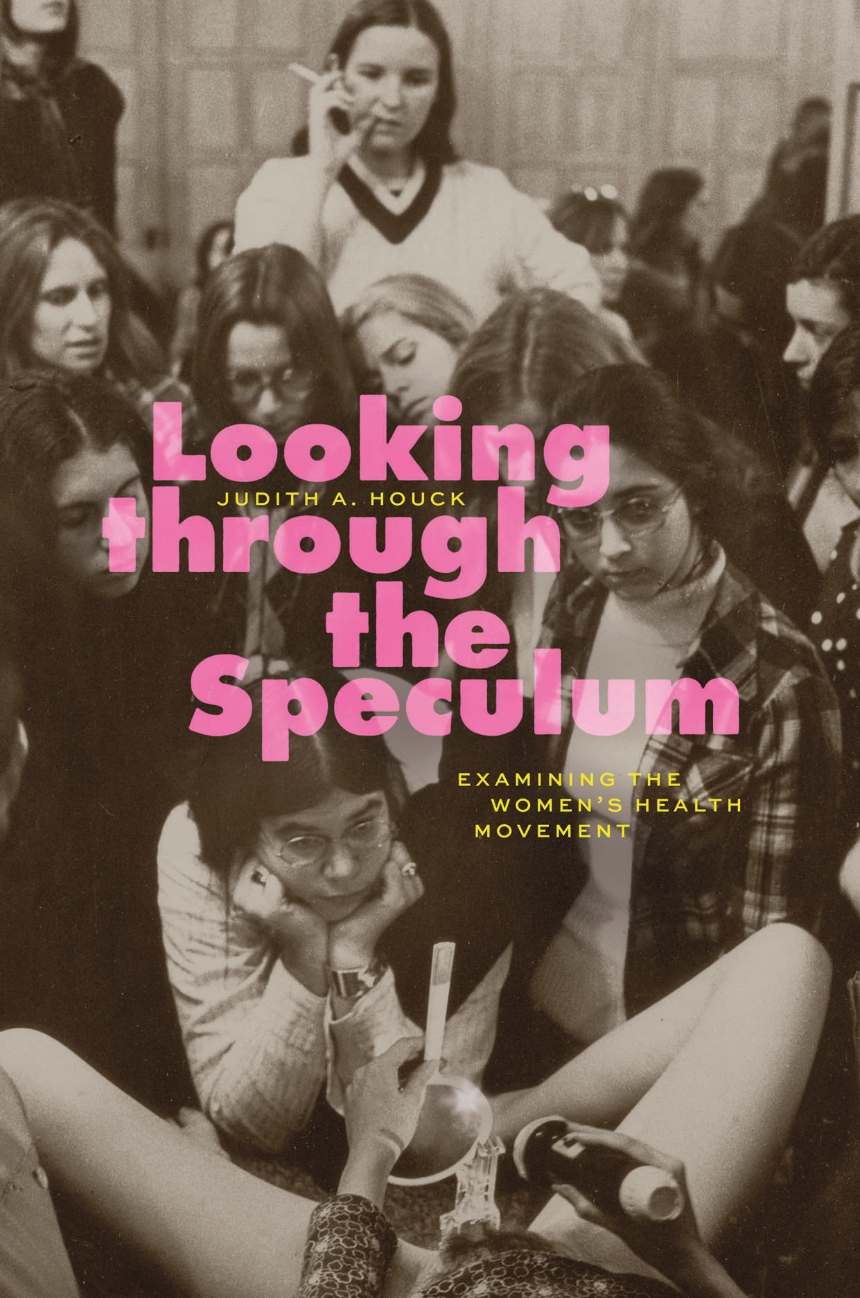
Looking through the Speculum: Examining the Women’s Health Movement
Houck, J. Looking through the Speculum: Examining the Women’s Health Movement. University of Chicago Press, 2024.
The women’s health movement in the United States, beginning in 1969 and taking hold in the 1970s, was a broad-based movement seeking to increase women’s bodily knowledge, reproductive control, and well-being. It was a political movement that insisted that bodily autonomy provided the key to women’s liberation. It was also an institution-building movement that sought to transform women’s relationships with medicine; it was dedicated to increasing women’s access to affordable health care without the barriers of homophobia, racism, and sexism. But the movement did not only focus on women’s bodies. It also encouraged activists to reimagine their relationships with one another, to develop their relationships in the name of personal and political change, and, eventually, to discover and confront the limitations of the bonds of womanhood.