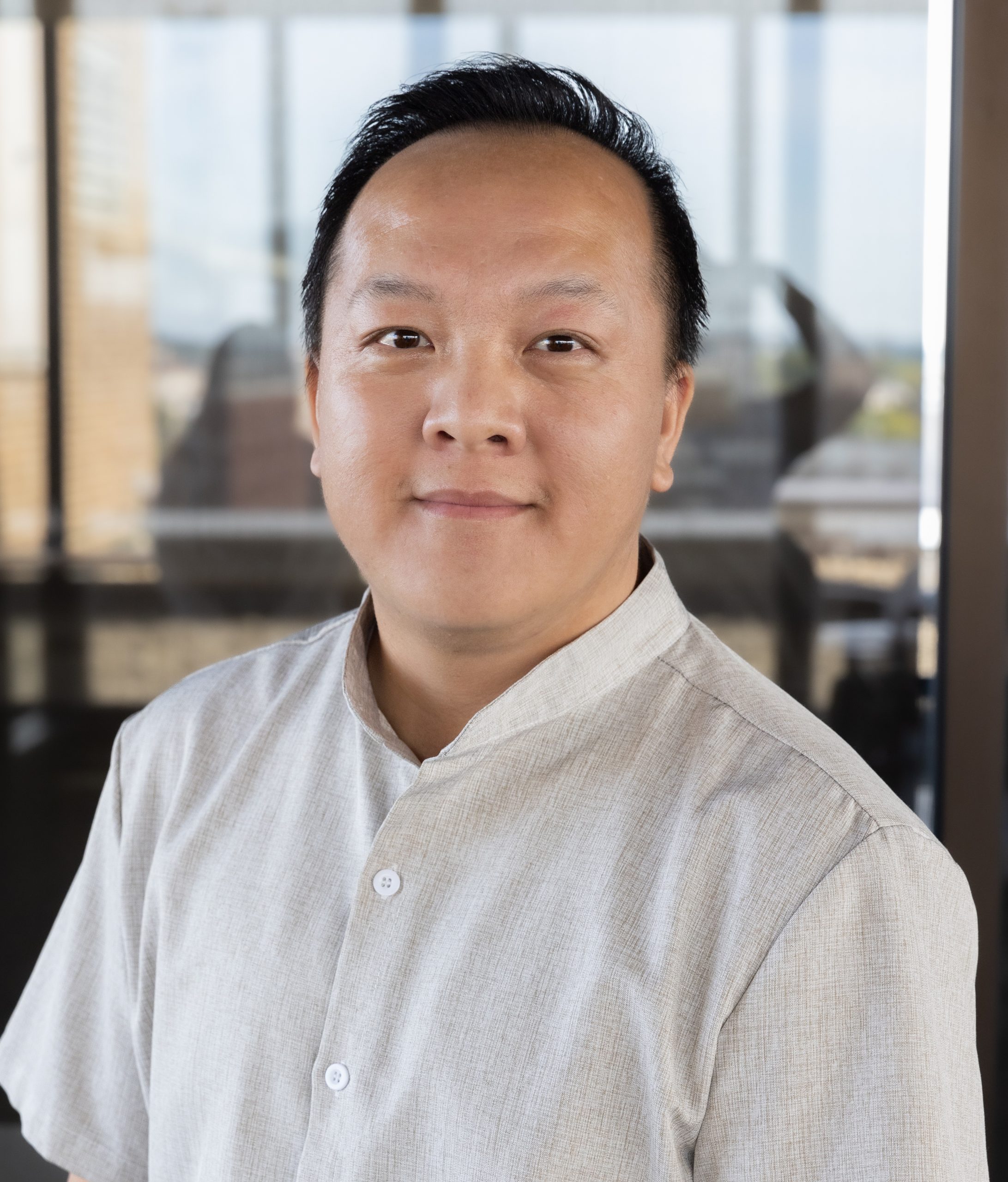
Kong Pheng Pha
Associate Professor of Gender & Women's Studies and Asian American Studies
he/him/his
5135 Levy Hall
Biography
Kong Pheng Pha is an interdisciplinary scholar and educator whose academic research, writing, and public scholarship explores the histories and politics of refugee migration, radical queer, feminist, and anti-racist social movements, activism, and community organizing, legacies of U.S. war and empire, minoritized student experiences in the modern university, and Asian American racial, gender, sexual, and queer formations, with particular attention on Hmong and Southeast Asian communities in the United States. He is the author of Queering the Hmong Diaspora: Racial Subjectivity and the Myth of Hyperheterosexuality (UWA Press, 2025), which examines Hmong racial and gendered subject formation and cultural transformations against the backdrop of U.S. sexual and queer liberalism. He is also currently writing a book of personal narrative nonfiction essays about Hmong’s place in a revolutionary America, and another book on the visuality of invisibility, secrecy, and statelessness.
Funded by the National Endowment for the Humanities and in collaboration with a team of community curators across the state of Wisconsin, he was co-project director of the community-based exhibit Los Tsev: Cia Siab (Hope) in Wisconsin, which was exhibited in Oshkosh, Milwaukee, De Pere, Eau Claire, Wausau, and Madison, Wisconsin to commemorate the 50th anniversary of Hmong and Southeast Asian resettlement in the United States. He is also a co-principal investigator on the participatory action research project Our HMoob American College Paj Ntaub conducted with student activists and education scholars exploring HMoob American undergraduate experiences, which is funded by a $2.2 million Racial Equity in STEM Education grant from the National Science Foundation. He received his B.A. in Psychology, Sociology, History, and Asian American Studies and Ph.D. in American Studies from the University of Minnesota.
Selected Publications:
“STEM Asianization and the Racialization of the Educational Experiences of Asian American College Students.” Race Ethnicity and Education (2025). (Co-authored with Matthew Wolfgram, Stacey J. Lee, Chundou Her, Bailey B. Smolarek, and Choua P. Xiong)
“Violent Invisibilities: The Battle for Hmong and Southeast Asian American Legibility in Higher Education.” AGITATE! Journal (2024). (Co-authored with Kaochi Pha and Dee Pha)
“Colorblindness as Anti-Asian Racism in the Midwest.” American Studies (2023).
“De-Exceptionalizing Sunisa Lee: Uneven Gymnastics and a Hmong American State-less Critique.” American Quarterly (2023). (Co-authored with Kari Smalkoski)
Queering the Hmong Diaspora: Racial Subjectivity and the Myth of Hyperheterosexuality
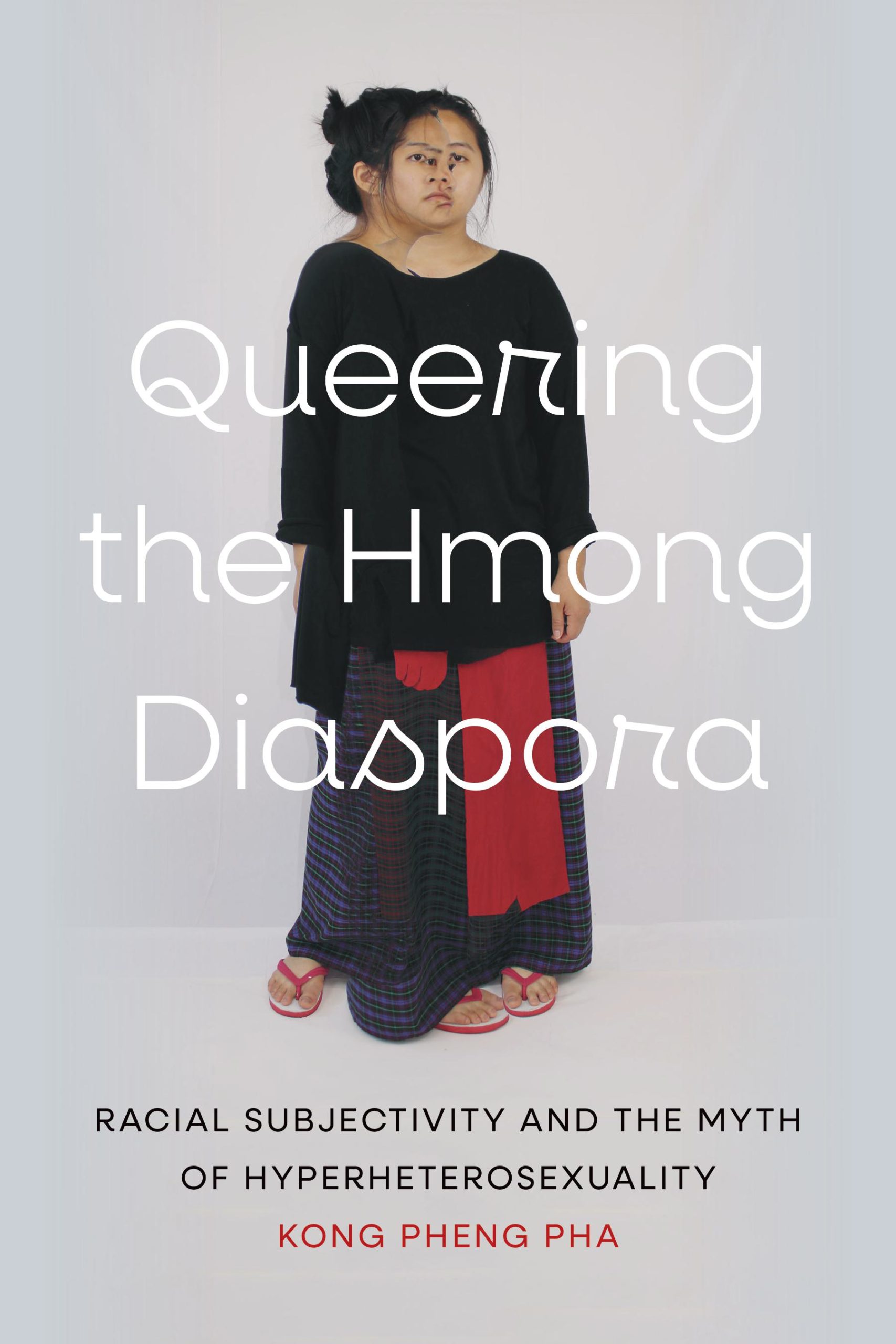
Queering the Hmong Diaspora: Racial Subjectivity and the Myth of Hyperheterosexuality
Pha, K. P. Queering the Hmong Diaspora: Racial Subjectivity and the Myth of Hyperheterosexuality. University of Washington Press, 2025.
In the wake of the US wars in Southeast Asia, the arrival of Hmong refugees reignited American anxieties about race and sexuality. Sensationalized media portrayals of child marriages, bride kidnappings, and polygamy framed Hmong communities as sexually deviant, reinforcing a racialized perception of their cultural practices. In Queering the Hmong Diaspora, Kong Pheng Pha dismantles these narratives, revealing how legal cases, media representations, and legislative efforts have constructed Hmong Americans as hyperheterosexual and ungovernable subjects. Critically examining how Hmong Americans are positioned within racial, gendered, and sexual discourses of liberalism, Pha explores the lived experiences of queer Hmong Americans, whose existence and activism challenge mainstream and ethnonationalist constructions of subjectivity. Addressing Hmong American gender and sexual politics through feminist, queer, and social justice lenses, Pha offers a critical framework for understanding how race and sexuality intersect in shaping the lives of minoritized refugee communities in the United States and beyond.