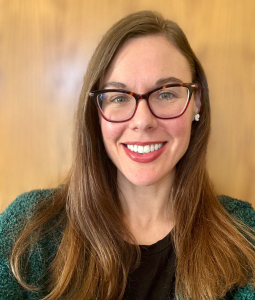
Alumni Spotlight – Shannon Patterson, Class of 2010
Shannon Patterson, PhD (she/her), is a licensed psychologist specializing in eating disorders and health psychology, who graduated from the University of Wisconsin–Madison in 2010 with degrees in Psychology and Sociology, along with certificates in Gender and Women’s Studies and Gerontology. Her clinical training focused on the intersection of physical and mental health, and she was trained in both health psychology and eating disorder treatment.
These days, Dr. Patterson divides her time between clinical instruction and her private practice, where she helps people heal from eating disorders while navigating chronic illness. Her work is deeply rooted in helping folks build peace with food and their bodies, and in challenging the cultural narratives that define what “health” and “wellness” should look like.
Outside of her clinical work, Shannon serves as an ad hoc reviewer for the International Journal of Eating Disorders and co-authored the forthcoming Weight-Inclusive CBT Workbook for Eating Disorders. She’s passionate about advancing ethical, evidence-based, and weight-inclusive care—both in direct practice and across the broader landscape of mental health treatment quality and innovation.
 How does Gender and Women’s Studies/LGBTQ+ studies matter in the day-to-day of your professional life?
My training in Gender and Women’s Studies has helped me conceptualize people within the context of broader systems and to understand how these systems impact mental health. It taught me to see therapy not just as symptom management, but as a space for empowerment and self-advocacy. That background also provided me with the language and foundational framework to notice and name the impact of social forces that shape our sense of self-worth, body image, and identity. It also taught me the importance of amplifying marginalized voices and lived experience through bibliotherapy, which has profoundly shaped the way I show up as a therapist. Perhaps most importantly, I learned the basics about intersectionality and the social determinants of health in GWS, two concepts that are really crucial to understand and apply now more than ever.
Do you have advice for students who may share your interests and may want to pursue a similar graduate degree and/or career?
It’s ok to take time to identify your passions and to work in different industries that interest you before pursuing an advanced degree. These experiences will help shape your understanding of what work environments best suit you. Your career is a marathon, not a sprint; it’s ok to go at your own speed, live life outside of school, and take care of yourself along the way!
What do you remember fondly from the Department of Gender & Women’s Studies? Favorite class? Instructor?
GWS classes were the ones I looked forward to attending the most. Although I don’t recall the names of all my professors (not all heroes wear capes!), I still clearly remember my 101 and 103 class projects and assignments—from the essay assignment being “Is Legally Blonde feminist?” to finally understanding how birth control pills work. The books from my feminist fairytale class are still sitting proudly on my office bookshelf. I remember that class being a lot of fun. Also, my favorite instructor is Dr. Kate Phelps. Guest lecturing in Dr. Kate’s class made me realize my love for clinical instruction and teaching. It continues to be a dream of mine to audit the Framing Fatness class… just sayin’, one of these days I’ll make it happen!
What, if anything, do wish you could tell your undergraduate self?
Follow your instincts about your interests and remain open to the possibility that they may shift or completely change over time. Don’t let your early academic and professional experiences lock you into a pragmatic path—take your time to explore. Consider what you want your life to look like outside of your occupation. There are many ways to pursue passions outside of your profession—it doesn’t have to be the only way to build meaning. There is more to your life than work.
How does Gender and Women’s Studies/LGBTQ+ studies matter in the day-to-day of your professional life?
My training in Gender and Women’s Studies has helped me conceptualize people within the context of broader systems and to understand how these systems impact mental health. It taught me to see therapy not just as symptom management, but as a space for empowerment and self-advocacy. That background also provided me with the language and foundational framework to notice and name the impact of social forces that shape our sense of self-worth, body image, and identity. It also taught me the importance of amplifying marginalized voices and lived experience through bibliotherapy, which has profoundly shaped the way I show up as a therapist. Perhaps most importantly, I learned the basics about intersectionality and the social determinants of health in GWS, two concepts that are really crucial to understand and apply now more than ever.
Do you have advice for students who may share your interests and may want to pursue a similar graduate degree and/or career?
It’s ok to take time to identify your passions and to work in different industries that interest you before pursuing an advanced degree. These experiences will help shape your understanding of what work environments best suit you. Your career is a marathon, not a sprint; it’s ok to go at your own speed, live life outside of school, and take care of yourself along the way!
What do you remember fondly from the Department of Gender & Women’s Studies? Favorite class? Instructor?
GWS classes were the ones I looked forward to attending the most. Although I don’t recall the names of all my professors (not all heroes wear capes!), I still clearly remember my 101 and 103 class projects and assignments—from the essay assignment being “Is Legally Blonde feminist?” to finally understanding how birth control pills work. The books from my feminist fairytale class are still sitting proudly on my office bookshelf. I remember that class being a lot of fun. Also, my favorite instructor is Dr. Kate Phelps. Guest lecturing in Dr. Kate’s class made me realize my love for clinical instruction and teaching. It continues to be a dream of mine to audit the Framing Fatness class… just sayin’, one of these days I’ll make it happen!
What, if anything, do wish you could tell your undergraduate self?
Follow your instincts about your interests and remain open to the possibility that they may shift or completely change over time. Don’t let your early academic and professional experiences lock you into a pragmatic path—take your time to explore. Consider what you want your life to look like outside of your occupation. There are many ways to pursue passions outside of your profession—it doesn’t have to be the only way to build meaning. There is more to your life than work.
How does Gender and Women’s Studies/LGBTQ+ studies matter in the day-to-day of your professional life?
My training in Gender and Women’s Studies has helped me conceptualize people within the context of broader systems and to understand how these systems impact mental health. It taught me to see therapy not just as symptom management, but as a space for empowerment and self-advocacy. That background also provided me with the language and foundational framework to notice and name the impact of social forces that shape our sense of self-worth, body image, and identity. It also taught me the importance of amplifying marginalized voices and lived experience through bibliotherapy, which has profoundly shaped the way I show up as a therapist. Perhaps most importantly, I learned the basics about intersectionality and the social determinants of health in GWS, two concepts that are really crucial to understand and apply now more than ever.
Do you have advice for students who may share your interests and may want to pursue a similar graduate degree and/or career?
It’s ok to take time to identify your passions and to work in different industries that interest you before pursuing an advanced degree. These experiences will help shape your understanding of what work environments best suit you. Your career is a marathon, not a sprint; it’s ok to go at your own speed, live life outside of school, and take care of yourself along the way!
What do you remember fondly from the Department of Gender & Women’s Studies? Favorite class? Instructor?
GWS classes were the ones I looked forward to attending the most. Although I don’t recall the names of all my professors (not all heroes wear capes!), I still clearly remember my 101 and 103 class projects and assignments—from the essay assignment being “Is Legally Blonde feminist?” to finally understanding how birth control pills work. The books from my feminist fairytale class are still sitting proudly on my office bookshelf. I remember that class being a lot of fun. Also, my favorite instructor is Dr. Kate Phelps. Guest lecturing in Dr. Kate’s class made me realize my love for clinical instruction and teaching. It continues to be a dream of mine to audit the Framing Fatness class… just sayin’, one of these days I’ll make it happen!
What, if anything, do wish you could tell your undergraduate self?
Follow your instincts about your interests and remain open to the possibility that they may shift or completely change over time. Don’t let your early academic and professional experiences lock you into a pragmatic path—take your time to explore. Consider what you want your life to look like outside of your occupation. There are many ways to pursue passions outside of your profession—it doesn’t have to be the only way to build meaning. There is more to your life than work.